Jammu and Kashmir
Śāṅkara Jyoti Prakāśa · शाङ्कर ज्योति प्रकाश
Pandrethan Mahadev Mandir - Pandrethan
Visited 2 June 2026 during the 2026 Sampoorna Bharata Yatra.
Adi Shankaracharya's Visit
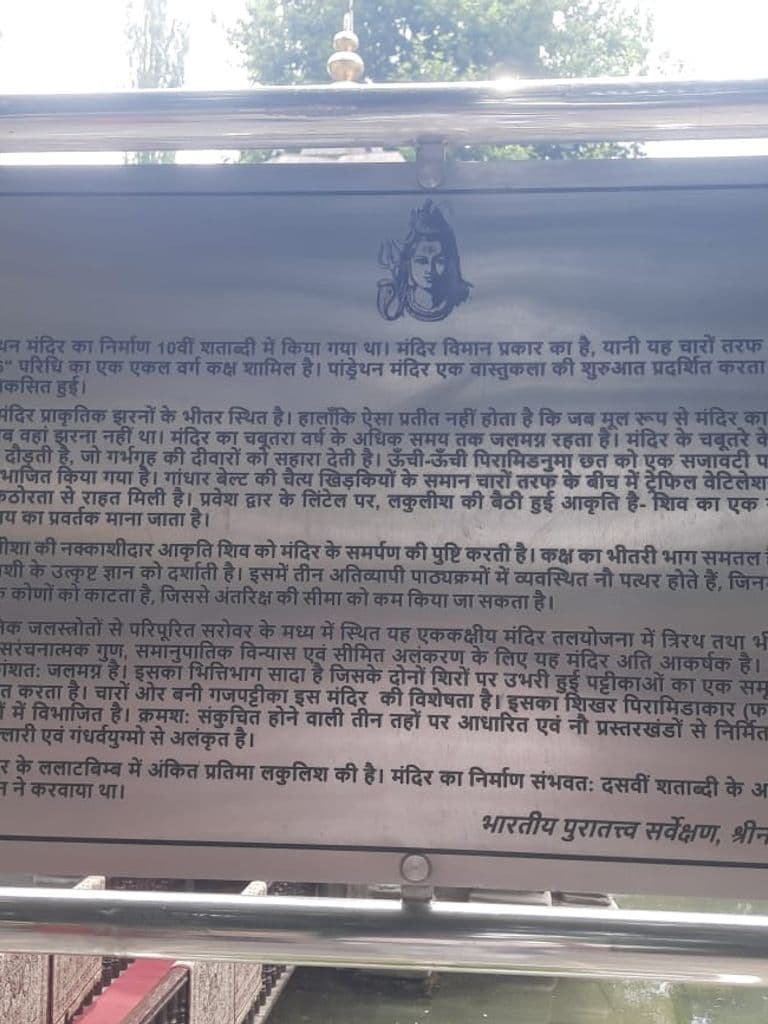
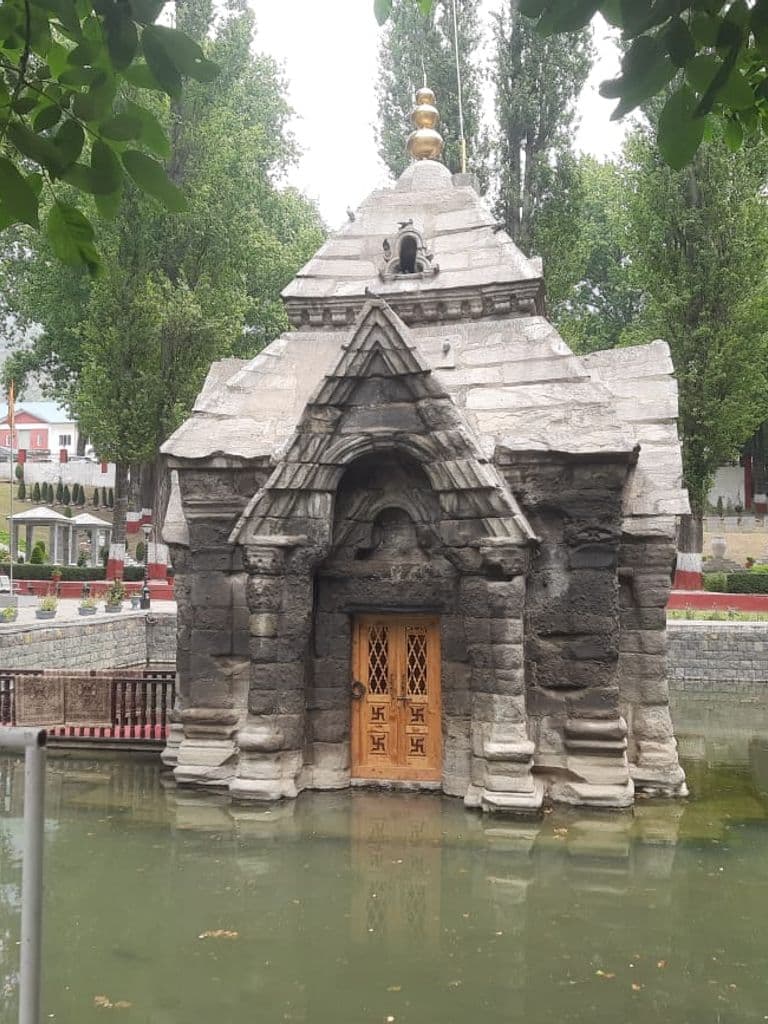
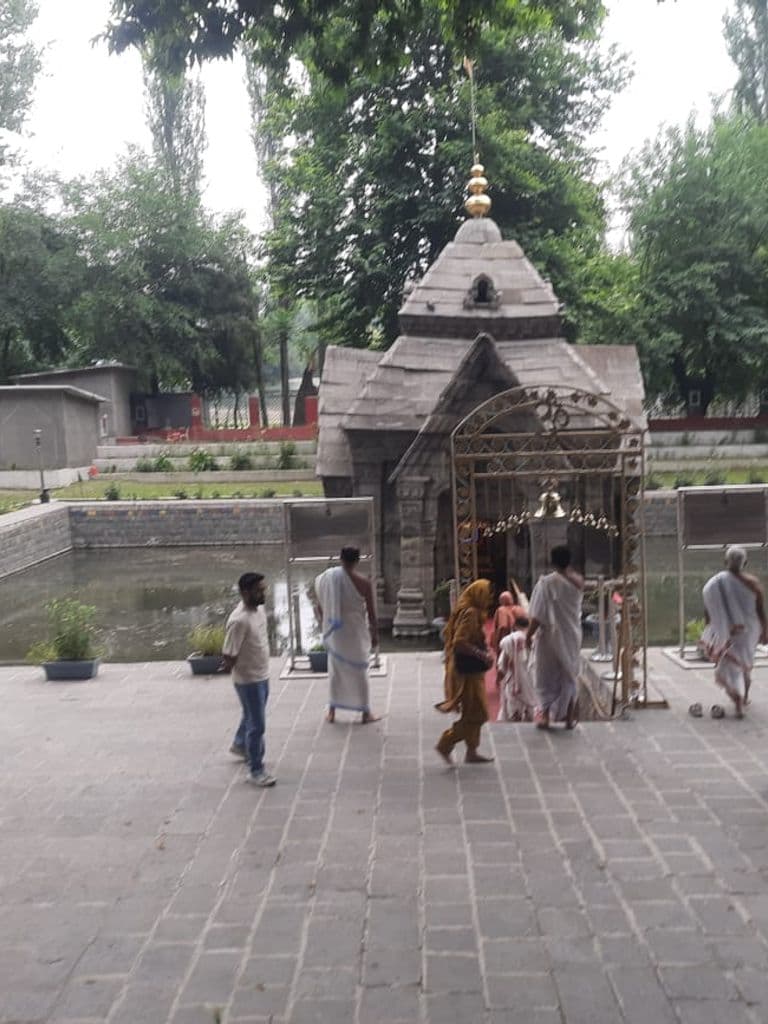
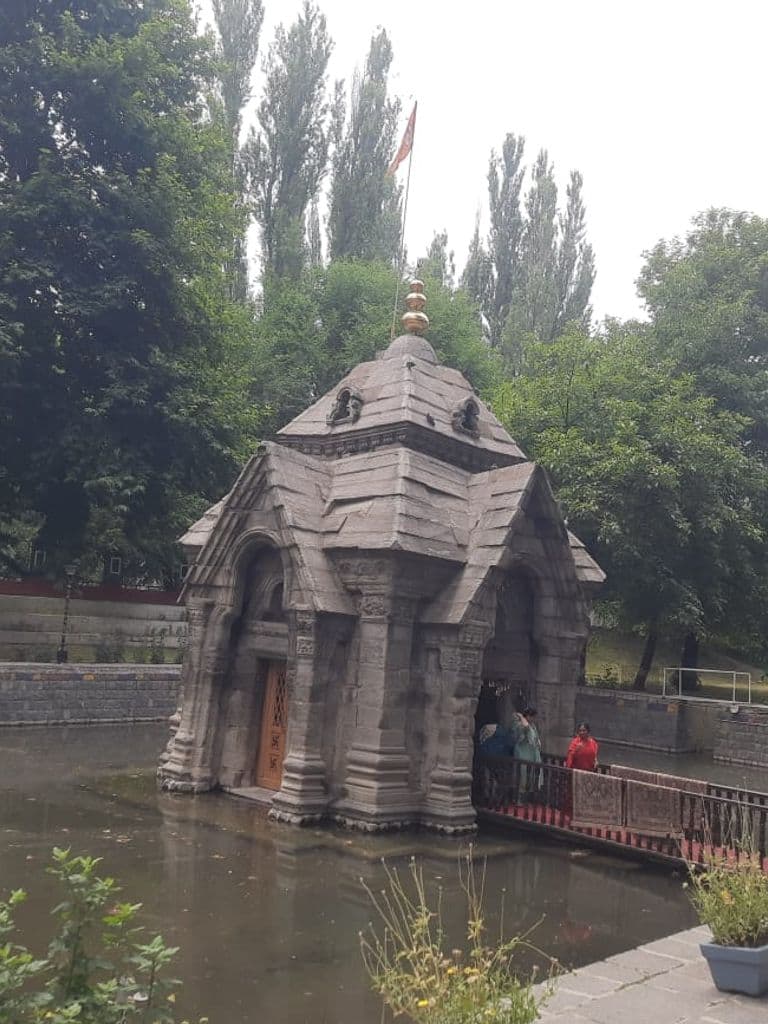
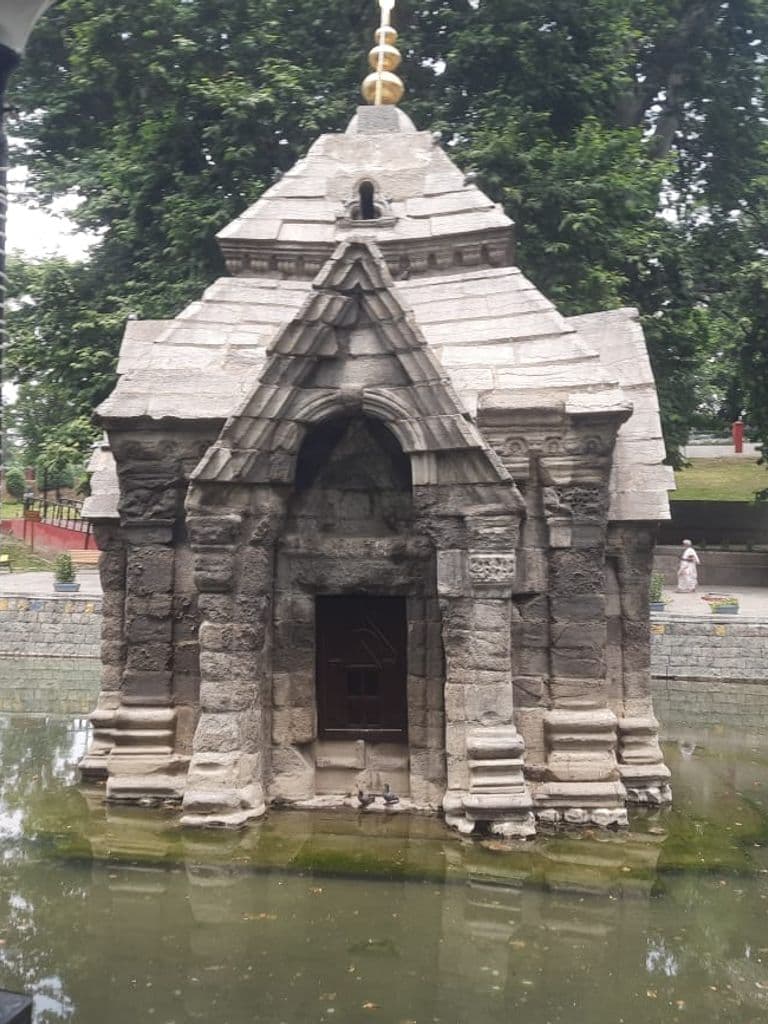
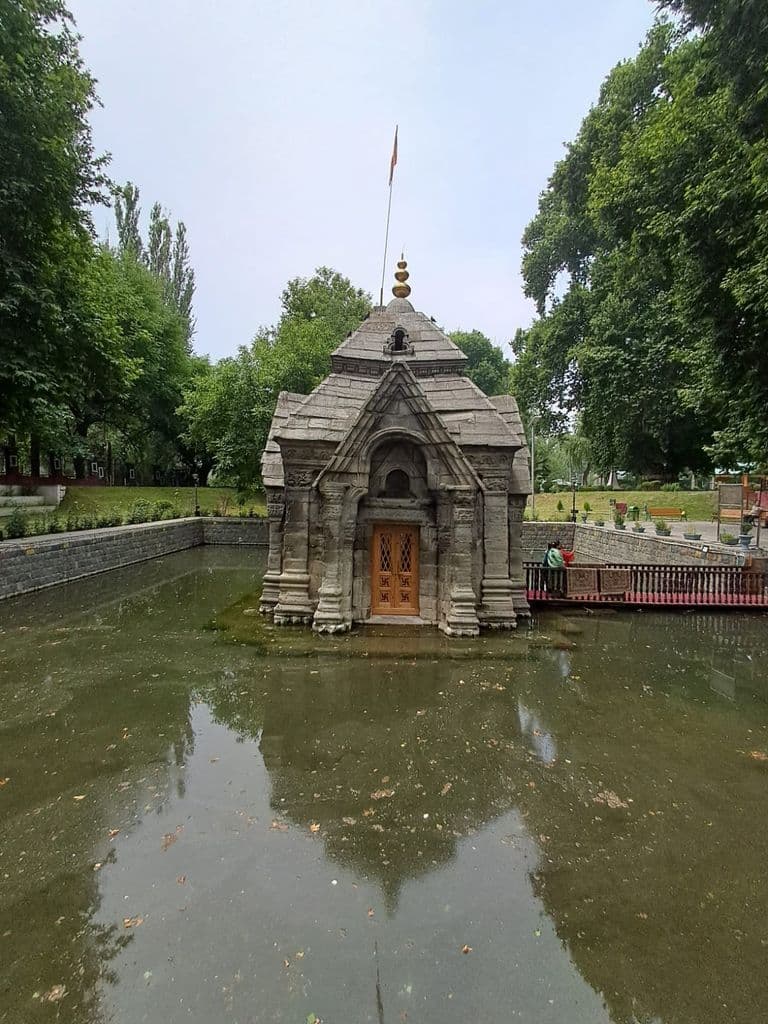
- Pandrethan — known today to locals simply as the Paani Mandir, the Temple in the Water — stands five kilometres south of Srinagar, a small, perfectly proportioned Shiva shrine rising from the centre of a spring-fed tank, surrounded by willows and Chinar trees, its plinth submerged in water throughout the year. This is no ordinary location: Pandrethan was the original Srinagar, the ancient capital established by Ashoka Maurya, called Puranaadhisthana — 'the old settlement' — a city that once housed layer upon layer of sacred construction: Jalauka's Jyeshta Rudra temple, Mihirakula's Mihiresvara, and. Pravarasena's Pravaresvara with its circle of Matrikas. The shastras are unambiguous about the sanctity of this water: bathing in it, or receiving it as tirtha, is held equivalent to bathing in the ocean itself.
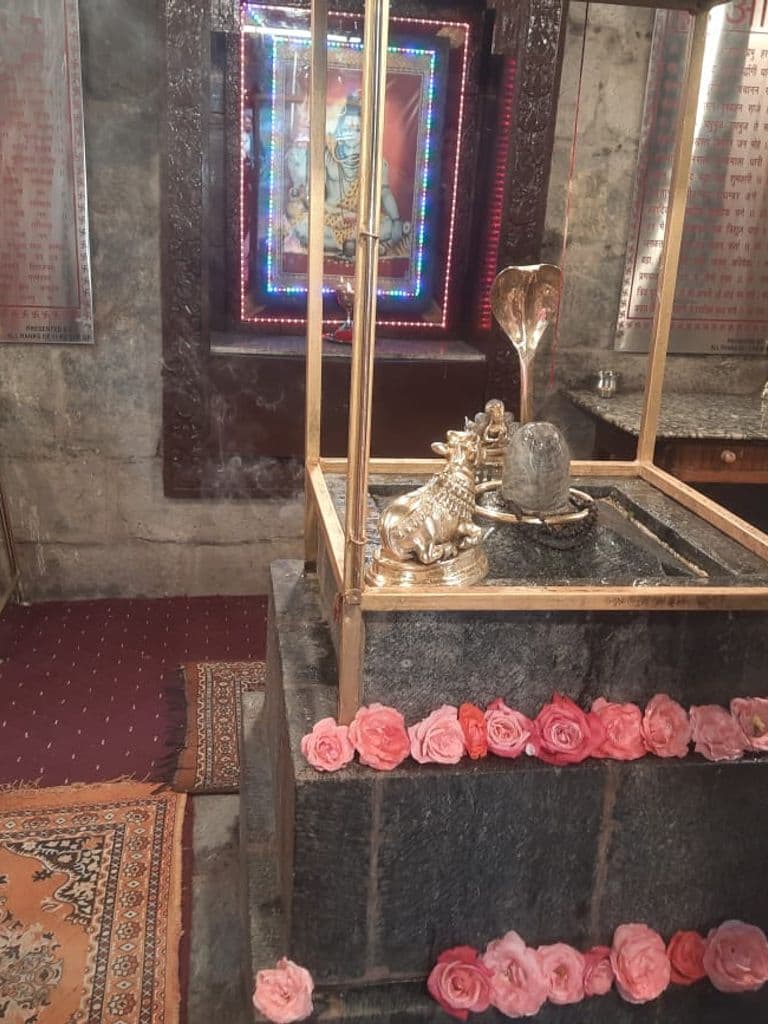
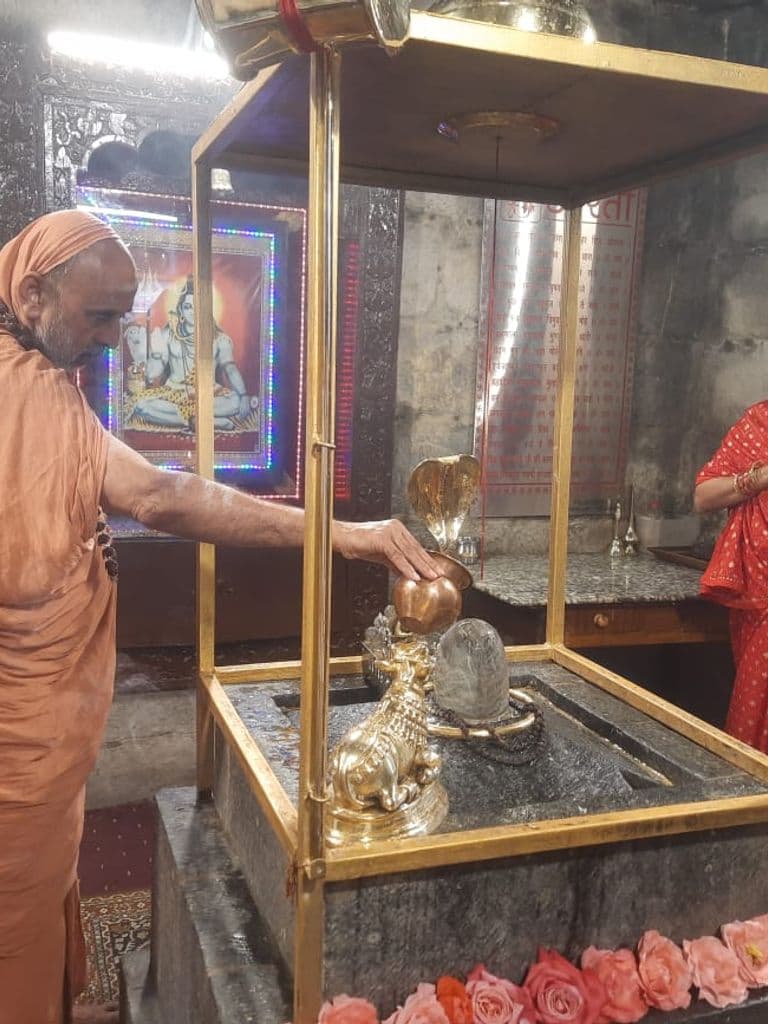
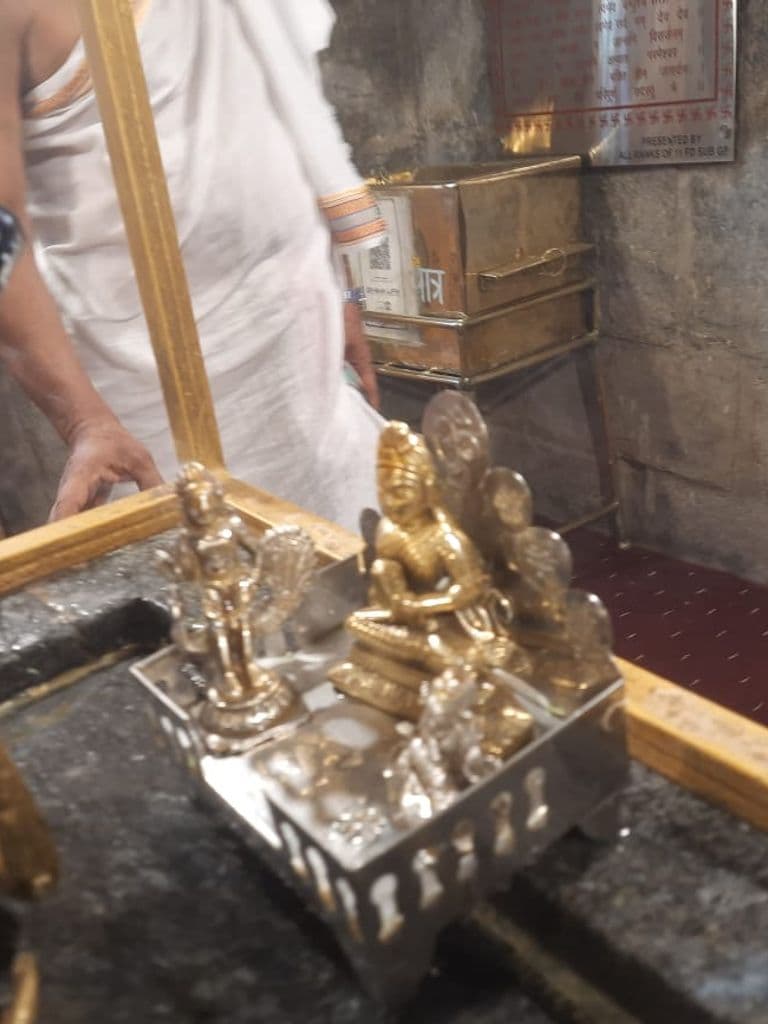
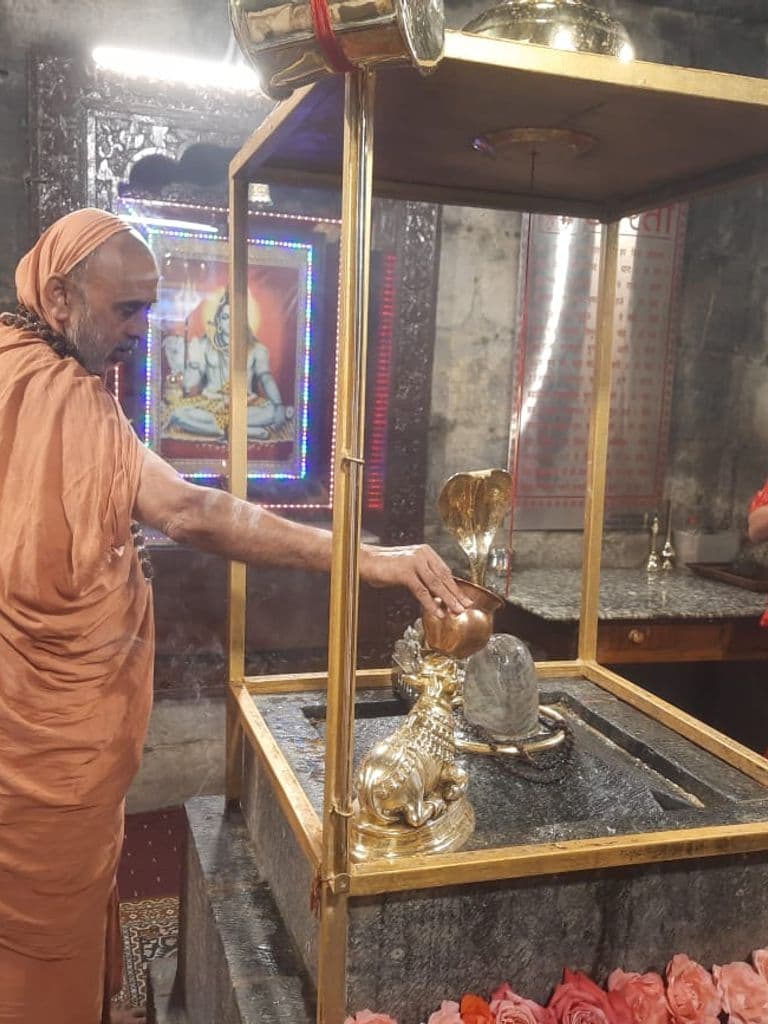
- At the heart of this water-temple is an Ishwara Linga that does something rare — it draws you. Stone it may be, yet every pilgrim who stands before it reports an inexplicable pull, a naturalness of attraction that no description quite accounts for. This is the anugraha of Adi Shankaracharya, who stayed at this site and whose presence consecrated the linga into what it remains today. The king ruling at that time was moved so profoundly by Adi Shankaracharya's visit that he committed himself and his court — ministers and people alike — to the path of Vaidika Dharma, a transformation that rippled across the entire region.
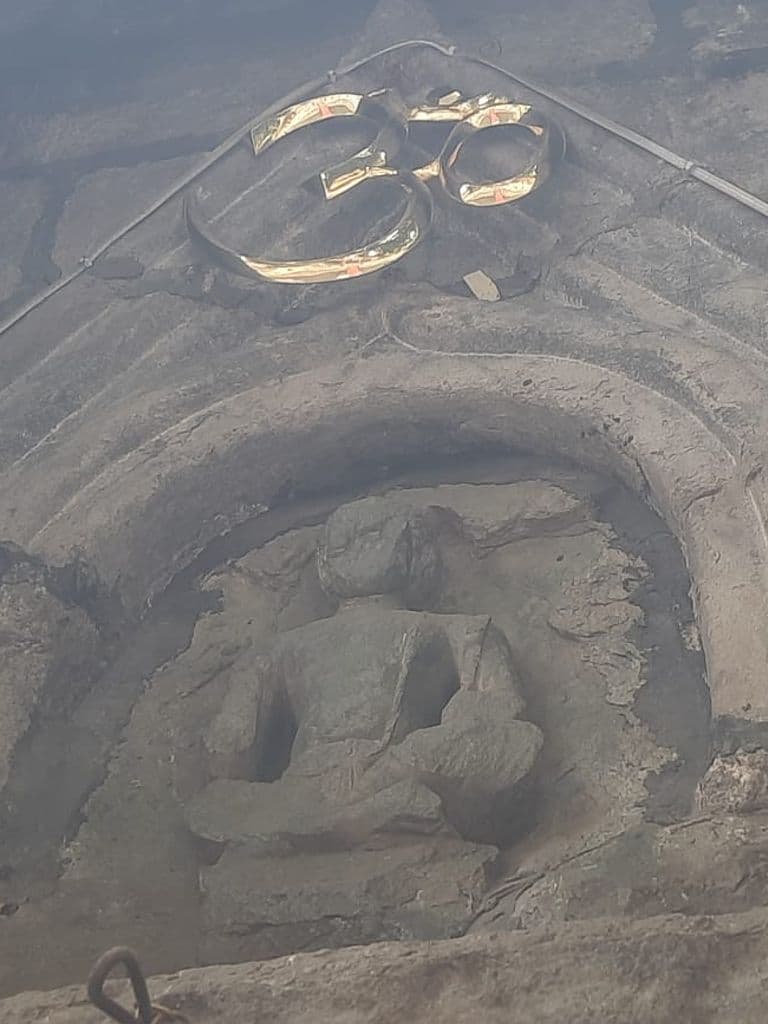
- The ceiling of the temple is among the finest surviving examples of stone carving in Kashmir — three intersecting squares, a lotus at the centre, geometry that mirrors the inner architecture of the Sri Yantra. And at the very top of the entrance doorway, carved in stone, is the vigraha of Adi Shankaracharya himself — quietly announcing, to every pilgrim who enters, whose grace lives inside.
The above findings are based on local recitations and living traditions, as well as inscriptions and markers observed at the site, supported by available historical references, certain scientific observations, and guidance from the Shastras. As our understanding continues to evolve, we will update this account from time to time as additional insights and information emerge from local communities and further study.
Do you have more information about this location, or any questions or feedback?
✉ Write to UsPhotos