Uttarakhand
Śāṅkara Jyoti Prakāśa · शाङ्कर ज्योति प्रकाश
Kedarnath
Visited 23 October 2026 during the 2026 Sampoorna Bharata Yatra.
Adi Shankaracharya's Visit
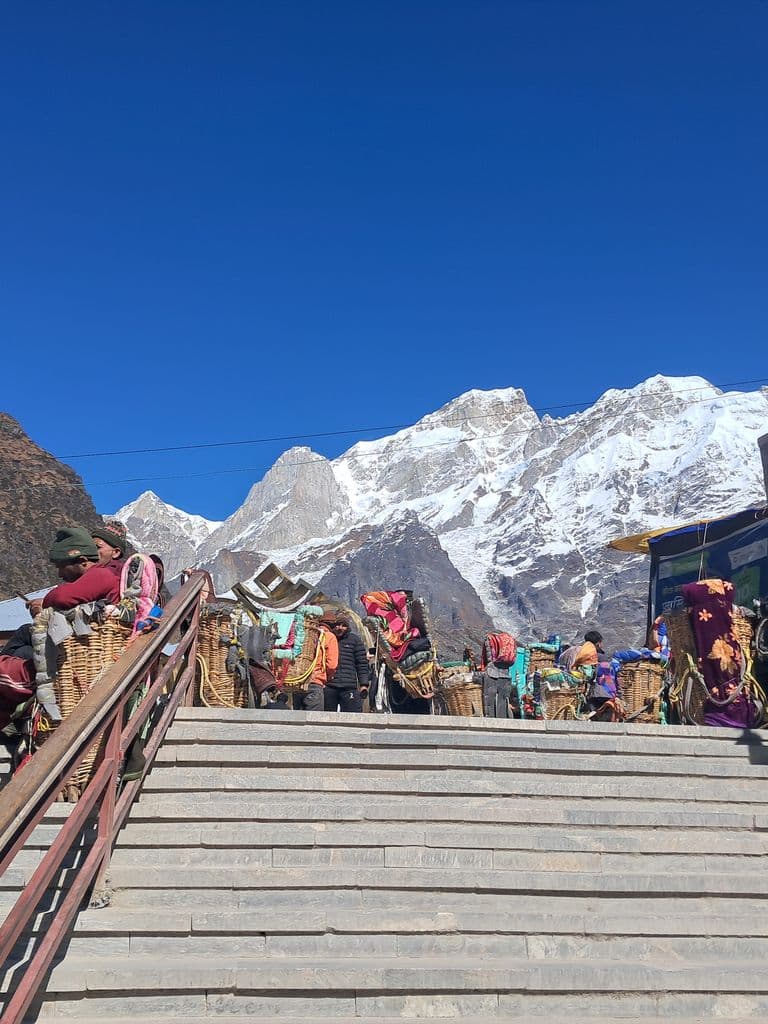
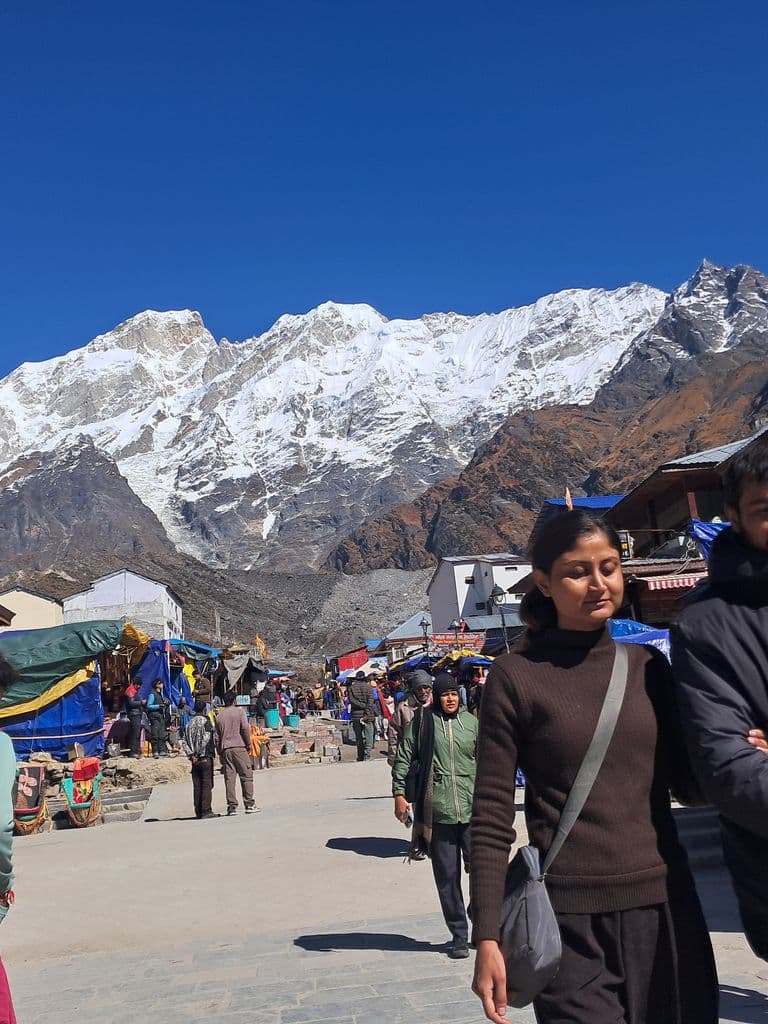
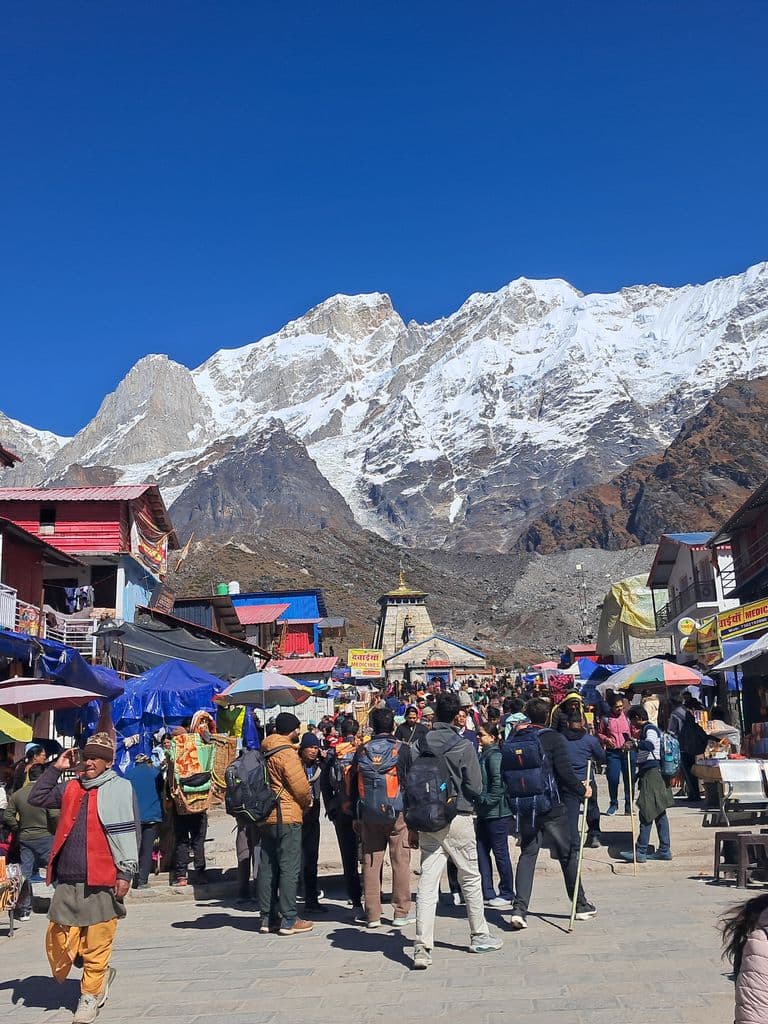
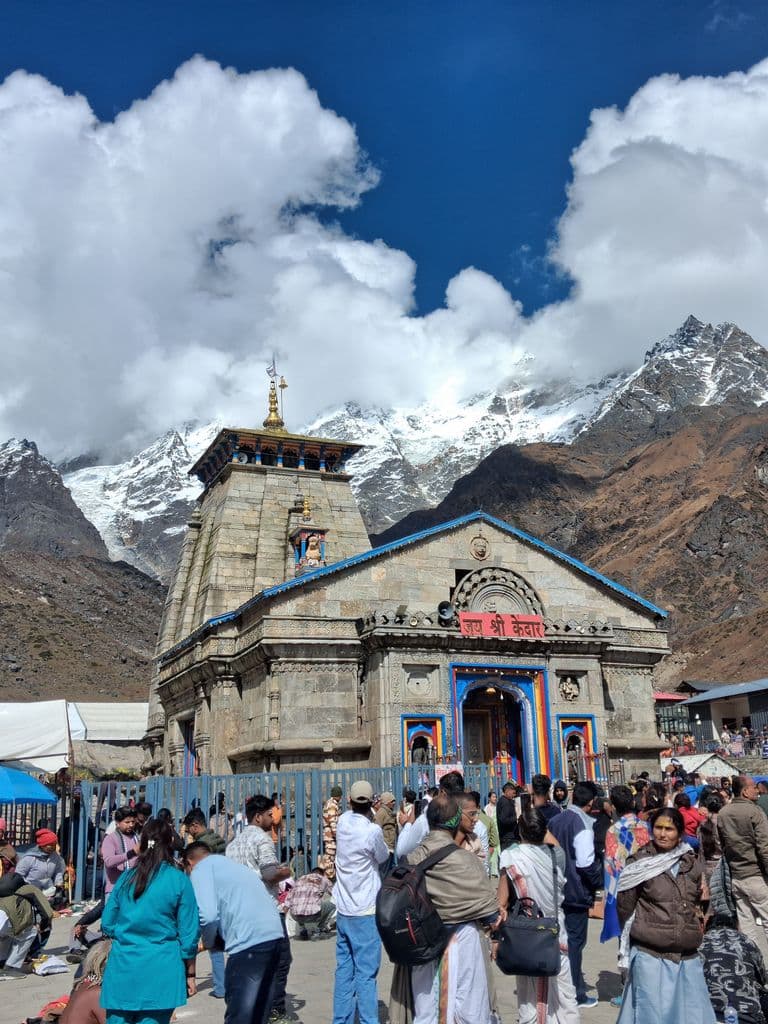
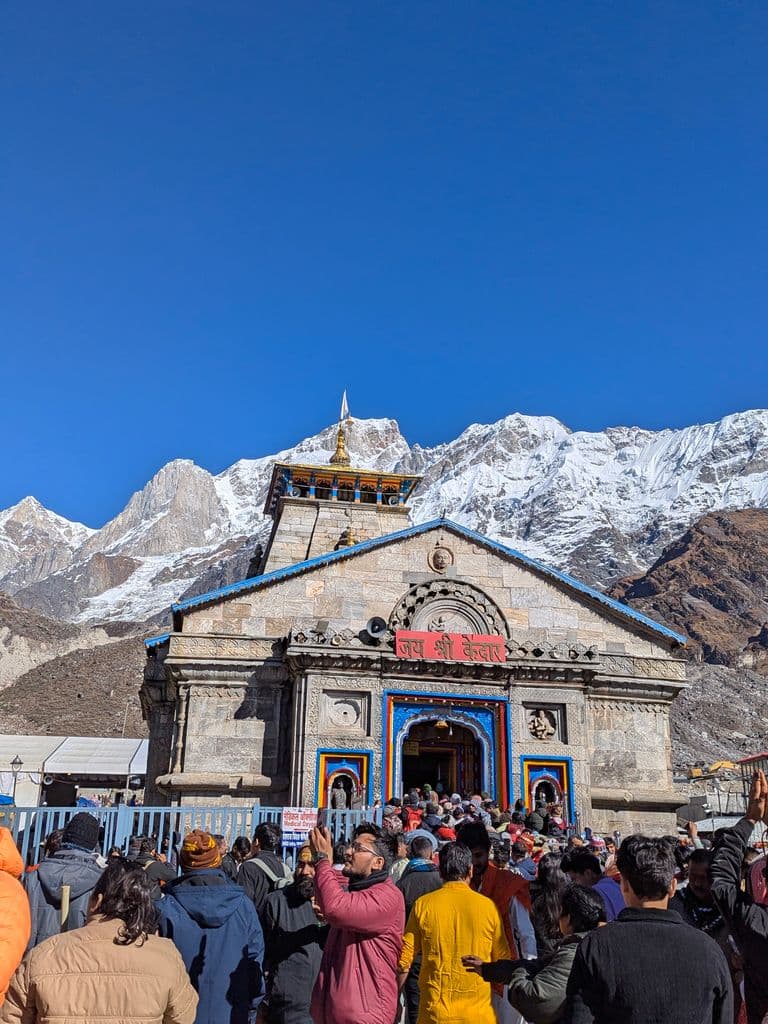
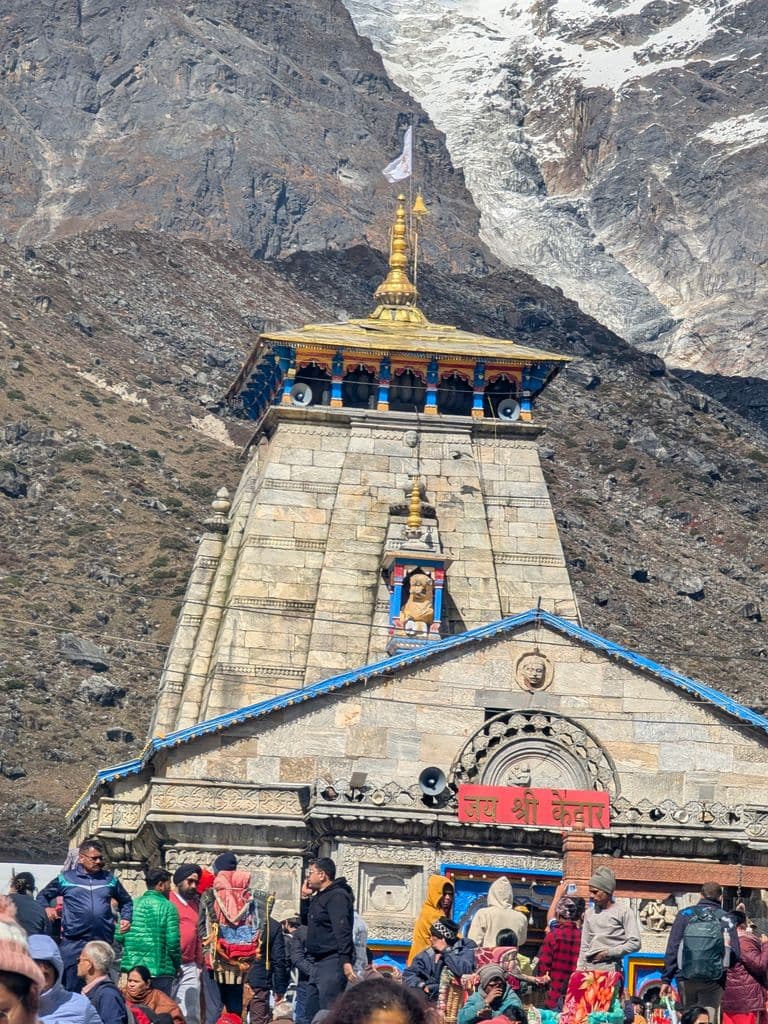
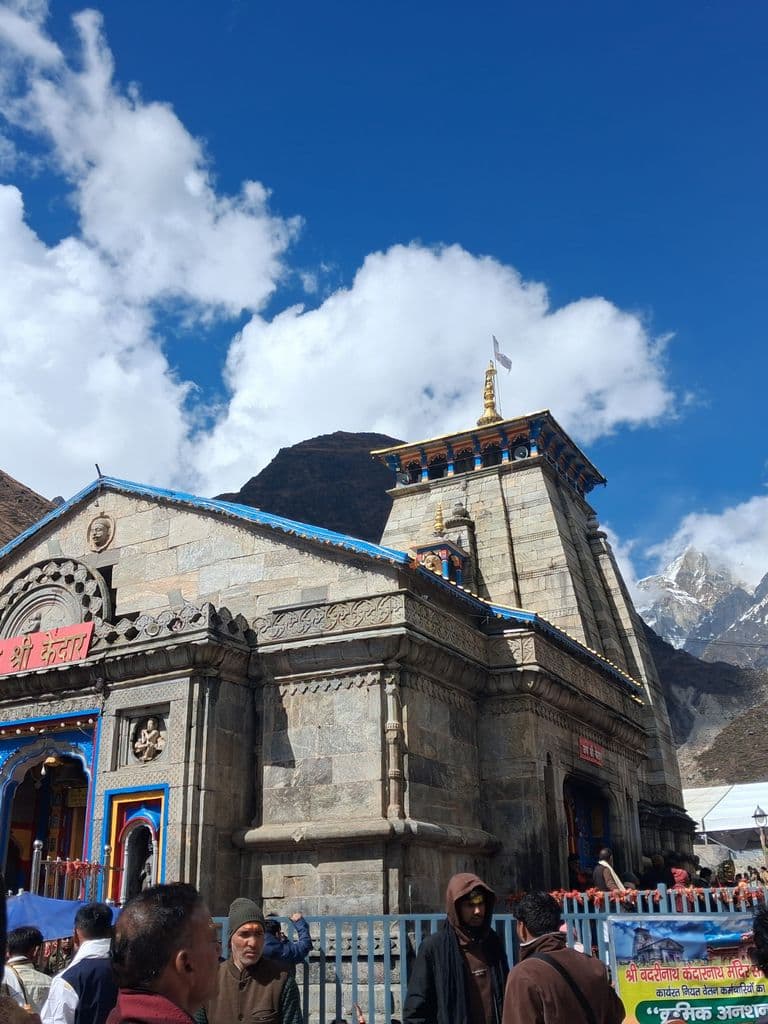
- Kedarnath Temple, situated at approximately 3,580 metres in the Garhwal Himalayas of Uttarakhand, is one of the twelve Jyotirliṅgas of Lord Shiva and a major centre of Himalayan pilgrimage. Located near the source region of the Mandakini River and surrounded by the Kedarnath, Kedar Dome and other high Himalayan peaks, the temple is built on a raised rectangular platform using massive, carefully fitted grey stone slabs.
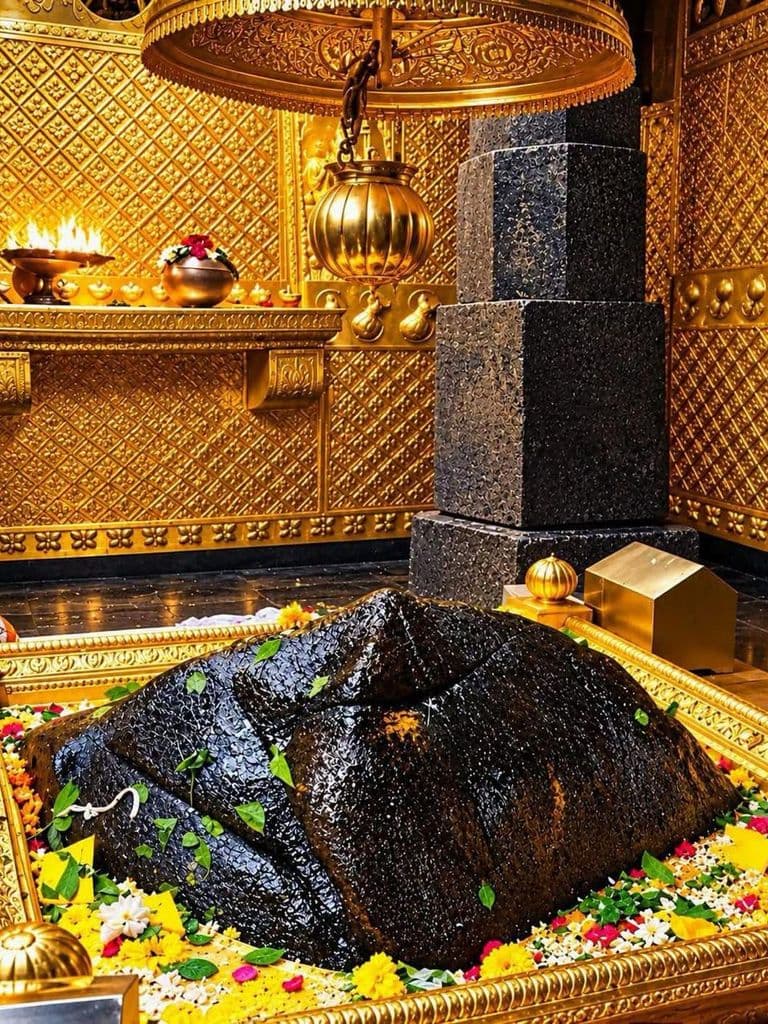
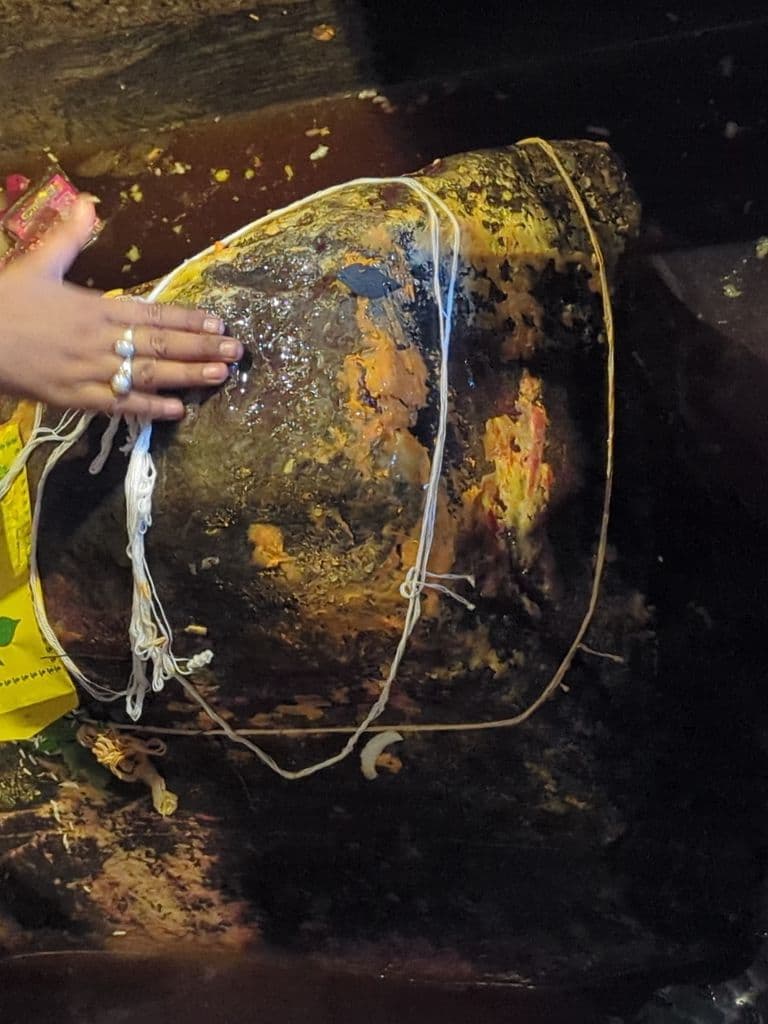
- The sanctum houses a naturally shaped, irregular conical stone worshipped as Shiva in his Sadāśiva form. A stone image of Nandi faces the entrance, while the inner walls of the assembly hall contain figures of deities and mythological scenes.
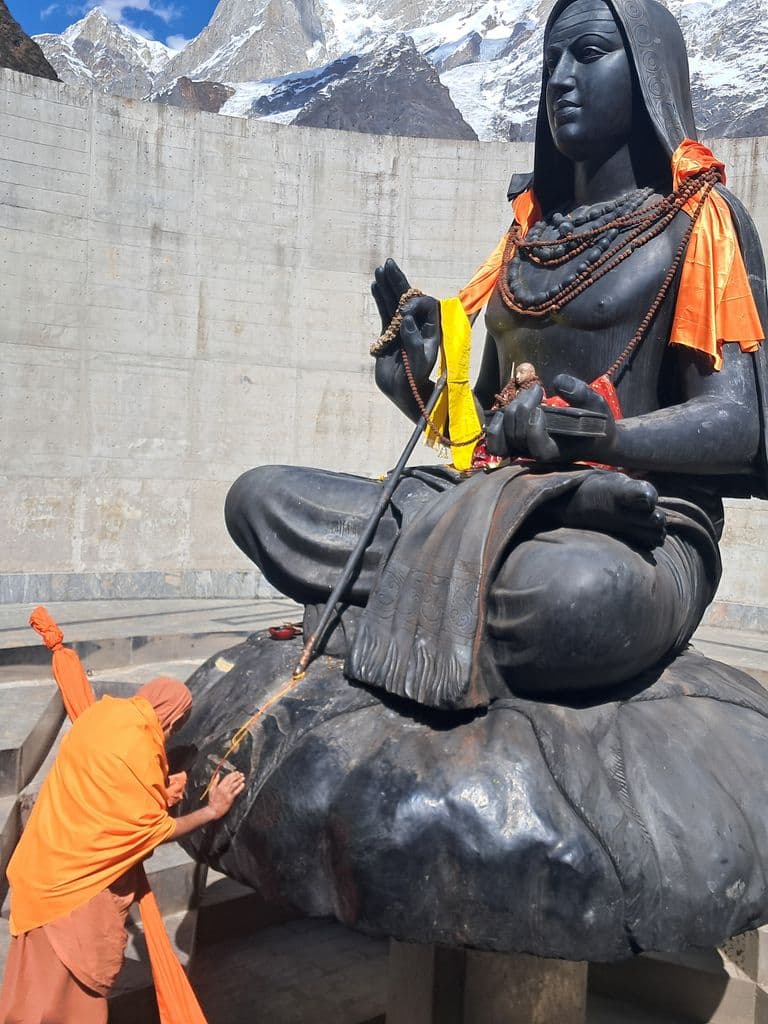
- The temple is traditionally associated with Ādi Śaṅkarācārya, who is believed to have revived the shrine and established its place in the wider pilgrimage tradition; a samādhi shrine dedicated to him stands behind the main temple. Inscriptions and architectural remains provide evidence of historical patronage and religious activity, while the temple’s survival through the devastating floods of June 2013, followed by conservation work, remains an important part of its recent history.
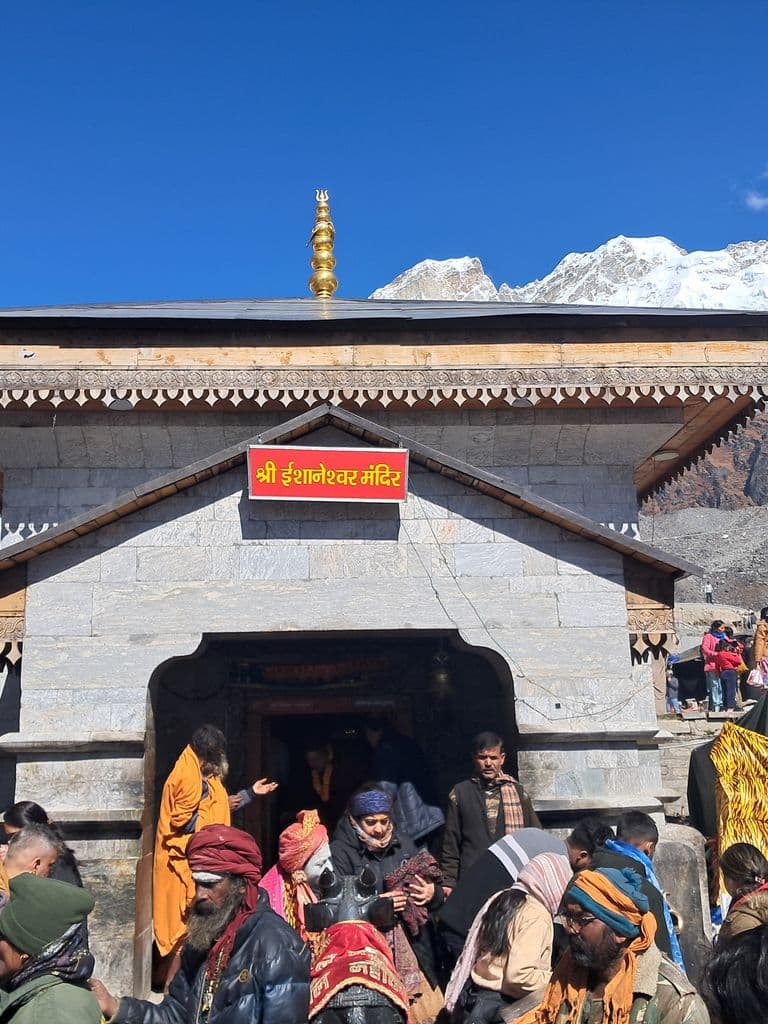
- Immediately next to the Kedarnath Temple, on the northern-eastern side of the temple complex, stands the Eshaneshwara Temple, a smaller shrine dedicated to Lord Shiva and listed among the subsidiary temples within the Kedarnath parikrama. The shrine is associated with the worship of Īśāna, a form of Shiva, and forms part of the sacred landscape surrounding the main Jyotirliṅga. The research team documents that Ādi Śaṅkarācārya performed the pratiṣṭhā of the Vigraha here.
- According to the tradition recorded by the team, Ādi Śaṅkarācārya visited Kedarnath twice with his śiṣyas: the first visit was to discuss and plan the wider implementation of measures for the protection and revival of Vaidika traditions across the country; the second visit was associated with his disappearance from the physical world at this sacred site.
- The Eshaneshwara Temple is therefore an important part of the local sacred geography and the traditions associated with Kedarnath.
The above findings are based on local recitations and living traditions, as well as inscriptions and markers observed at the site, supported by available historical references, certain scientific observations, and guidance from the Shastras. As our understanding continues to evolve, we will update this account from time to time as additional insights and information emerge from local communities and further study.
Do you have more information about this location, or any questions or feedback?
✉ Write to UsPhotos